7 min read
Paradox Museum London: Knightsbridge's Mind Bending Museum of Optical Illusions
Paradox Museum London features over 50 immersive optical illusions opposite Harrods, offering one of London's most interactive museum experiences.
Paradox Museum London is one of those rare spots in the city where you don’t just look at exhibits, you step straight into them and become part of the illusion.
Located directly opposite Harrods in Knightsbridge, the museum brings together more than 50 optical illusions, immersive rooms and perception-defying installations that challenge how your brain understands space, movement and reality. Unlike traditional museums where you're encouraged not to touch anything, almost every exhibit here invites you to step inside, pose for photos and become part of the illusion.
Since opening in 2024, Paradox Museum London has become one of the capital's most talked-about attractions, earning thousands of positive reviews from visitors looking for something different from London's usual museums and galleries.
Here's everything you need to know to plan your visit.
What is Paradox Museum London?
Paradox Museum London is an immersive museum dedicated entirely to optical illusions, visual tricks and interactive experiences that explore how the human brain interprets the world around it.
The museum is built around experiences that challenge your perception. Some rooms alter your sense of balance, others manipulate perspective, while several make it appear as though you're floating, shrinking or even walking on the ceiling.
The museum is part of the international Paradox Museum network, which already operates successful attractions in cities including Paris, Shanghai and Miami.
The London location occupies a surprisingly large space above street level on Brompton Road. From outside, it looks relatively modest, but once inside you'll discover two exhibition wings connected by a bright central space beneath a glass roof, creating far more room than most people expect.
What makes the Paradox Museum different?
Most museums ask you to observe. The Paradox Museum asks you to participate.
Almost every installation invites you to step into the scene instead of simply observing it. Some rooms only work properly if another person takes your photograph, while others rely entirely on your movement to create the illusion.
The experience feels more like a science playground than a conventional museum.
It also helps that the museum explains why each illusion works. QR codes positioned throughout the exhibition allow you to learn about the psychology, mathematics and physics behind many of the installations, making the visit surprisingly educational alongside being entertaining.
Whether you're interested in photography, neuroscience, perception or simply having fun, the museum offers something beyond the usual sightseeing experience.
The best optical illusions you shouldn't miss
With more than 50 exhibits spread across the museum, it's impossible to cover everything. However, several installations consistently stand out.
The Ames Room
If there's one room everyone talks about after leaving, it's this one.
The Ames Room uses forced perspective to make people appear dramatically different in size depending on where they stand. Move into one corner and you'll suddenly appear tiny. Walk across to the opposite corner and you'll seem to tower over everyone else.
The illusion is incredibly simple in concept but remarkably convincing in person.
It's also one of the funniest rooms in the museum because everyone's first reaction is usually laughter. Not surprisingly, this is also one of the busiest photo spots in the building.
The Zero Gravity Room
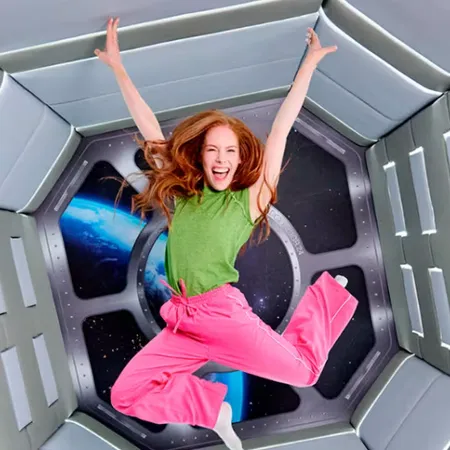
This installation quickly becomes one of the museum's most disorientating experiences.
While your eyes insist you're standing upright, your body struggles to agree. The sensation of movement feels surprisingly real, even though you're standing on a solid floor.
Interestingly, the illusion looks relatively subtle on camera compared with how dramatic it feels while you're inside it.
It's one of those experiences that genuinely demonstrates how easily your brain can be tricked.
The Paradox Tunnel
The tunnel has become another favourite for many visitors.
As you walk through, the rotating surroundings convince your brain that you're falling or losing balance, despite the walkway itself remaining completely stable.
The effect lasts only a few moments, but it's enough to make many people instinctively reach for the handrail.
If you're sensitive to motion sickness, take your time with this one.
The Kaleidoscope Room
This installation transforms your reflection into dozens of repeating images through carefully arranged mirrors.
Instead of simply seeing yourself once, you're surrounded by countless versions of your own reflection stretching in every direction.
The result is surreal, colourful and highly photogenic.
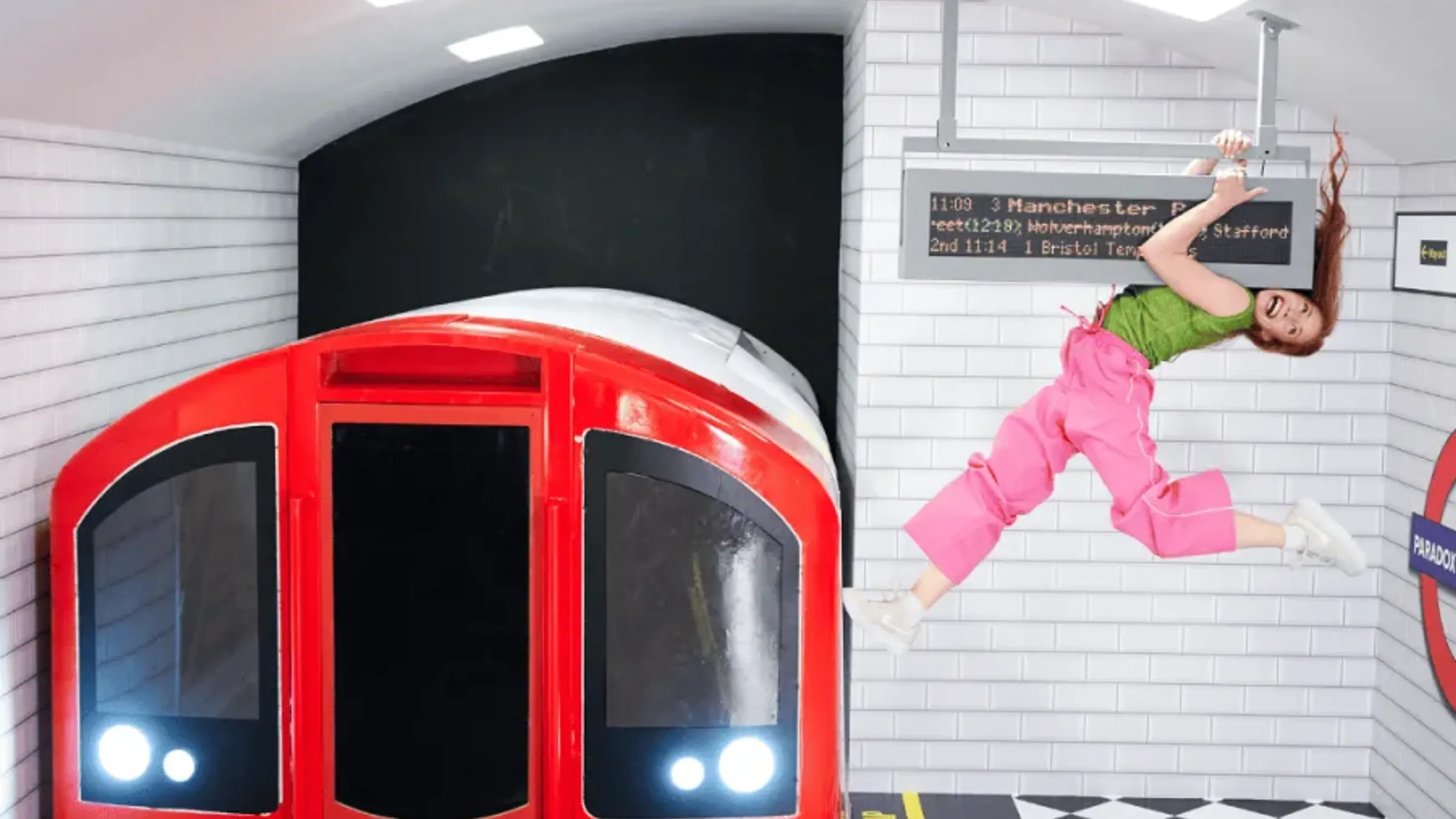
The Upside Down Underground Station
One of the museum's most photographed installations recreates a London Underground platform turned completely upside down.
Stand in the correct position and photographs make it appear as though you're hanging from the ceiling or walking upside down inside the station.
It's playful, instantly recognisable and one of the best places in the museum for memorable photos.
The museum is designed to keep you engaged
One of the reasons the Paradox Museum works so well is its layout.
The museum doesn't group all the headline attractions in one place; it spreads large installations alongside smaller illusions throughout both exhibition wings. This keeps the experience varied and means you're constantly discovering something new as you move through the space.
Some illusions take only a few seconds to experience, while others encourage you to slow down, experiment with different angles and understand what's happening.
The central glass-roofed area also provides a natural break between the two wings. It fills the museum with daylight and offers unexpected views across to the upper levels of Harrods.
There's even a small balcony where you can step outside for a few minutes before continuing your visit.
The photo guides
One feature that deserves more attention is the museum's photography guidance.
Every major installation includes signs showing exactly where to stand and where your camera should be positioned for the illusion to work properly.
Without these guides, many of the effects simply don't translate into photographs.
The museum's staff are also happy to help if you're visiting alone or need someone to take your picture.
This might sound like a small detail, but it transforms the experience. Instead of leaving with confusing photos that don't capture the illusion, you end up with images that look exactly as intended.
QR Codes explain the science behind every illusion
The museum doesn't just want you to enjoy the illusions. It also explains why they work.
Exhibits include QR codes that reveal the science behind the installation, covering topics such as visual perception, perspective, psychology and how the brain processes information.
If you're visiting with children, these explanations add an educational layer that helps answer the inevitable question: "How does that work?"
Adults who enjoy science or psychology will probably find themselves scanning quite a few of them too.
Is the Paradox Museum suitable for children?
Although the museum is filled with clever scientific concepts, none of them require specialist knowledge to enjoy.
Children are naturally drawn to the interactive rooms, while teenagers usually spend as much time taking photos as they do exploring the exhibits.
Adults, meanwhile, often discover that the illusions are far more convincing than expected.
The result is an attraction that works across multiple age groups rather than being aimed at only one audience.
It's also an excellent option if you're looking for something indoors during wet weather or school holidays.
How long should you allow for your visit?
Most people spend between 60 and 90 minutes inside the museum.
If you're keen on photography or enjoy reading the scientific explanations throughout the exhibition, it's worth allowing closer to 90 minutes.
The museum isn't enormous, but because nearly every room encourages interaction, you'll naturally spend longer than you would in a traditional gallery.
Some of the best illusions become even more enjoyable when you take a little time experimenting with different viewpoints.
How to get to Paradox Museum London
- Address: 90 Brompton Road, London SW3 1JJ, directly opposite Harrods.
- By Tube: Piccadilly Line – Knightsbridge Station. Around a 2-minute walk from the exit.
- By Bus: Routes 14, 74, 414 and C1 stop along Brompton Road, close to the museum entrance.
- By Foot:
From South Kensington Station: approximately 10 minutes.
From Sloane Square Station: approximately 15 minutes. - By Car: Parking in Knightsbridge is very limited and expensive, so public transport is strongly recommended.
Tips before you visit
A little planning makes the experience even better.
- Book your timed ticket in advance, especially on weekends and during school holidays.
- Follow the photography guides beside each illusion for the best results.
- Take your time in the Zero Gravity Room and Paradox Tunnel if you're sensitive to motion.
- Don't skip the smaller installations between the larger rooms. Some of the cleverest illusions are also the simplest.
- Scan the QR codes if you're interested in the science behind what you're seeing.
- If the Ames Room has a queue when you arrive, continue exploring and come back later.
Quick information
Location: 90 Brompton Road, London SW3 1JJ
Nearest Tube: Knightsbridge Station
Landmark: Opposite Harrods
Price: From £27
Tickets: Click here to book
Exhibits: 50+ interactive illusions
Highlights: Ames Room, Zero Gravity Room, Paradox Tunnel, Kaleidoscope Room, Upside Down Tube Station
Average time required: 60 to 90 minutes
Whether you're visiting with family, meeting friends or simply looking for something different after shopping around Harrods, Paradox Museum delivers an experience that's both fun and surprisingly educational.
It's rare to leave a museum laughing this much, but that's exactly what makes Paradox Museum London stand out.
London
Paradox Museum London
£27